Briefly:
- Water-wise landscaping groups plants by water needs, favours WA native species, and uses efficient irrigation to cut outdoor water use.
- Garden watering accounts for a significant share of household water use in Western Australia, making design choices in Bunbury gardens genuinely count.
- Working with an experienced local landscaper helps match plant choices, soil prep, and irrigation design to Bunbury’s sandy soils and coastal climate.
Bunbury’s sandy coastal soils and dry summers mean a water-wise garden needs more than drought-tolerant plants. It needs the right design, soil preparation, and irrigation plan working together from the start.
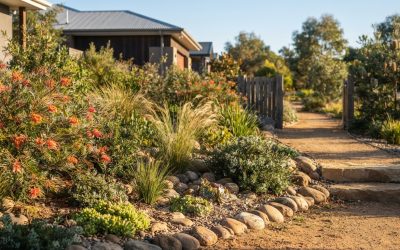
Planning landscaping in Bunbury around water efficiency starts with understanding how a garden actually uses water, then matching plant groupings, turf areas, and reticulation to the property’s conditions. Getting this sequence right from the design stage avoids costly replanting or irrigation rework later.
Why Water-Wise Design Matters in the South West
Garden watering makes up a large portion of residential water consumption across the state. More than a third, around 36 per cent, of water used domestically is in the garden, making native plants a smarter choice for WA. That figure applies broadly across Western Australia, including the South West, where similar sandy soils and dry summers drive high outdoor water demand.
Household watering is also governed by seasonal rules. Sprinklers must not be used from 1 June to 31 August each year in Perth and the South West. A garden designed to cope with this winter switch-off, rather than relying on daily watering, holds up far better through Bunbury’s dry months.
Core Principles of a Water-Wise Garden
A properly planned garden reduces water waste without sacrificing visual appeal. Key design principles include:
- Hydrozoning – grouping plants with similar water needs together so no area is over or under-watered.
- Native and drought-tolerant plant selection – choosing species suited to local soil and rainfall patterns.
- Mulching – covering garden beds to slow evaporation and protect root systems from heat.
- Efficient reticulation – installing systems that deliver water only where and when it is needed.
Waterwise garden design should incorporate waterwise plants and a functional mix of hard surface, garden beds and lawn species suitable for the local climate, using hydrozoning to group plants according to their irrigation, nutrient and maintenance requirements. This approach applies directly to Bunbury properties, where sandy, free-draining soil means water moves through quickly and inconsistent watering patterns waste more than they help.
Soil preparation plays an equally important role before any planting begins. According to the Water Corporation’s waterwise guidance, garden owners are encouraged to check soil moisture before turning sprinklers on and to only water when the garden genuinely needs it, rather than on a fixed schedule. Improving sandy soil with organic matter before laying turf or garden beds helps it hold moisture longer, reducing how often irrigation needs to run.
Matching Plants, Lawn, and Irrigation to Local Conditions
A water-wise Bunbury garden typically balances three elements: plant beds, lawn area, and hard surfaces such as paving. Getting this mix right affects both water use and long-term maintenance.
| Garden Element | Water-Wise Approach | Typical Benefit |
| Garden beds | Native/drought-tolerant species, grouped by hydrozone | Lower ongoing watering needs |
| Lawn areas | Minimised footprint, quality turf suited to climate | Easier to maintain, less runoff |
| Reticulation | Zoned irrigation matched to plant groupings | Reduces over-watering and waste |
| Mulch and soil prep | Organic matter added before planting, mulch layer applied | Better moisture retention |
This kind of layout also suits Bunbury’s residential and commercial properties alike, where lawn, garden beds, and paved areas need to work together rather than compete for the same watering schedule.
Reticulation design is often the part homeowners underestimate. A system with separate zones for lawn and garden beds, each programmed to the actual needs of the plants in that zone, avoids the common problem of lawn watering settings being applied across an entire property regardless of plant type.
Getting Professional Input on Design and Installation
Translating these principles into a working garden usually benefits from local landscaping experience, particularly when it comes to soil behaviour, plant selection for Bunbury’s specific conditions, and reticulation layout. Myada, a Bunbury-based landscaping business, works with residential and commercial clients across the Greater Bunbury area on garden design, irrigation, and installation. The business can be found on its Google Business Profile.
A water-wise garden is less about restriction and more about matching design to the environment it sits in. Getting the plant groupings, soil preparation, and irrigation zoning right from the outset means a Bunbury garden can stay green through summer while using considerably less water than a conventional layout.
Frequently Asked Questions
What makes a garden “water-wise” rather than just low-maintenance? A water-wise garden is specifically designed around reducing irrigation demand through plant selection, hydrozoning, and soil preparation, while low-maintenance gardens may simply reduce pruning or mowing effort without addressing water use directly.
Can an established Bunbury garden be converted to water-wise principles? Yes, existing gardens can often be retrofitted by regrouping plants into hydrozones, adjusting reticulation zones, and adding mulch, though full conversions are usually more effective when planned alongside a broader landscaping review.
Do water-wise gardens still need irrigation during summer? Most will need some watering during warmer months, but daytime sprinkler use is restricted to once on a rostered day, either before 9am or after 6pm, which reduces the amount of water lost through evaporation.
Are there seasonal rules Bunbury homeowners need to follow for garden watering? Yes, sprinkler restrictions apply across the South West, including a winter switch-off period, so garden design should account for periods without scheduled irrigation.
Planning a water-wise garden in Bunbury comes down to matching plant choices, soil preparation, and irrigation design to the local climate rather than applying generic gardening advice. Taking the time to plan these elements together, ideally before any planting or paving begins, sets a property up for a garden that stays healthy through dry months without relying on excessive watering.